
About MacheMinds
A studio that starts from the materials in the room.
MacheMinds is a school-first planning studio for Dutch primary classrooms. A teacher or a parent writes down what is actually there, the youngest age, the minutes, and the tools. The studio answers with a rule you can read. It does not certify a toy, a joint, or a bag of clay.
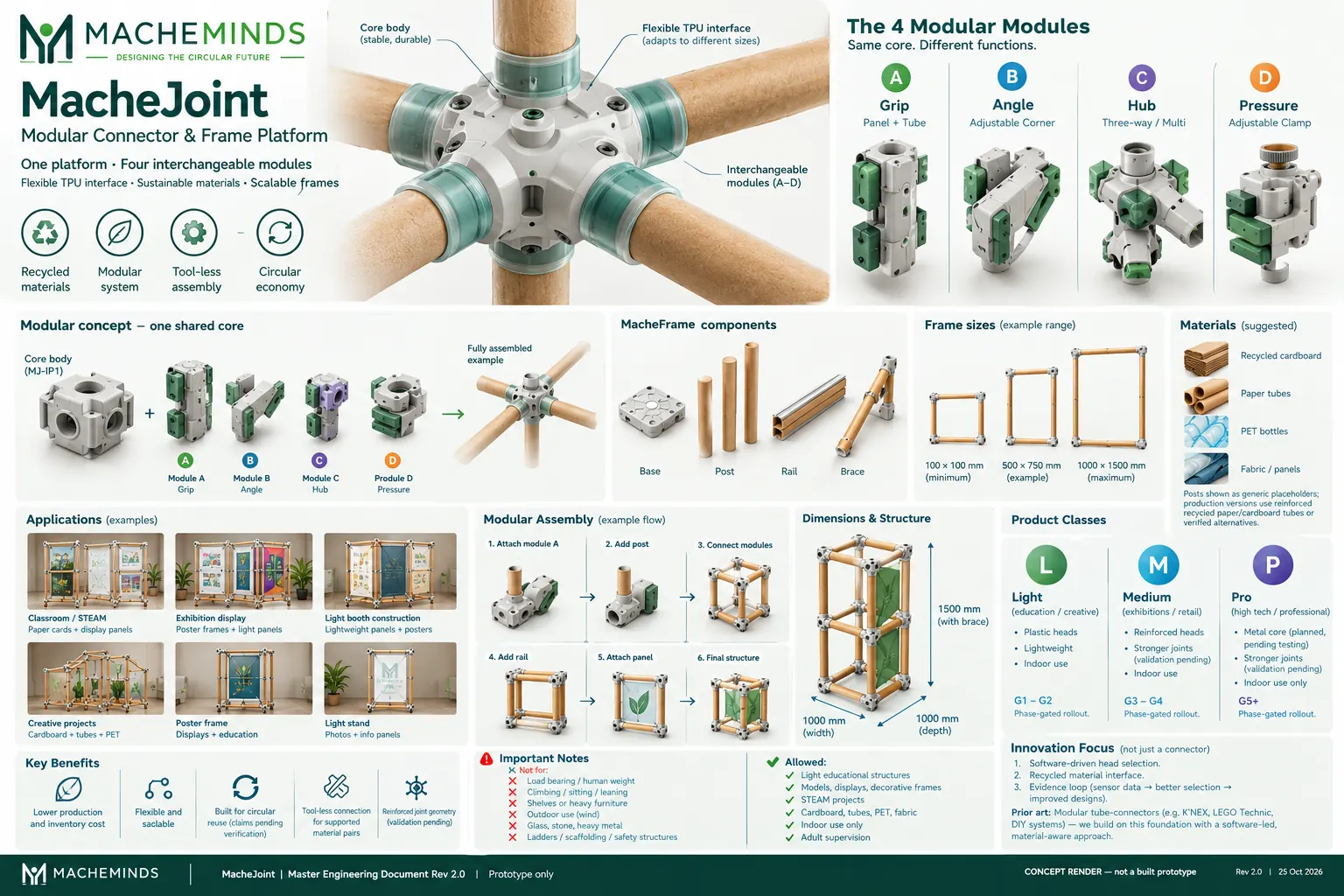
MacheJoint is one core and four jobs.
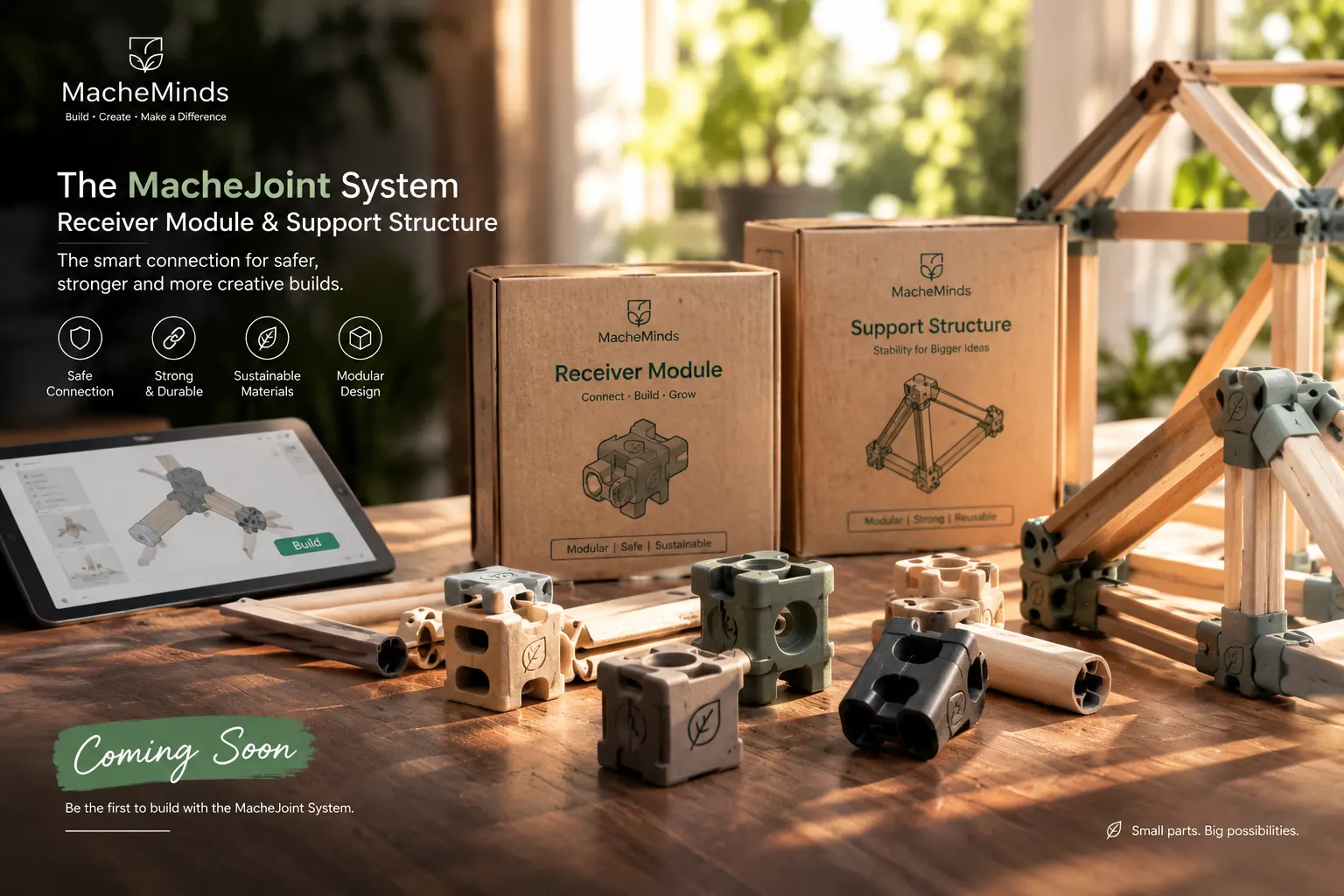
We designed a connector platform for light indoor models: a stable core, and four modules that swap onto it. Grip holds a panel. Angle sets a corner. Hub joins three ways. Pressure closes a clamp. A flexible TPU layer is there to meet cardboard, tubes, and clean bottles. It is not the thing that is supposed to carry a person, a shelf, or a climbing load. The pictures are concept renders from October 2026. Fit, retention, and durability are still untested.
Prototype only. Not for human weight, climbing, seating, or overhead use.
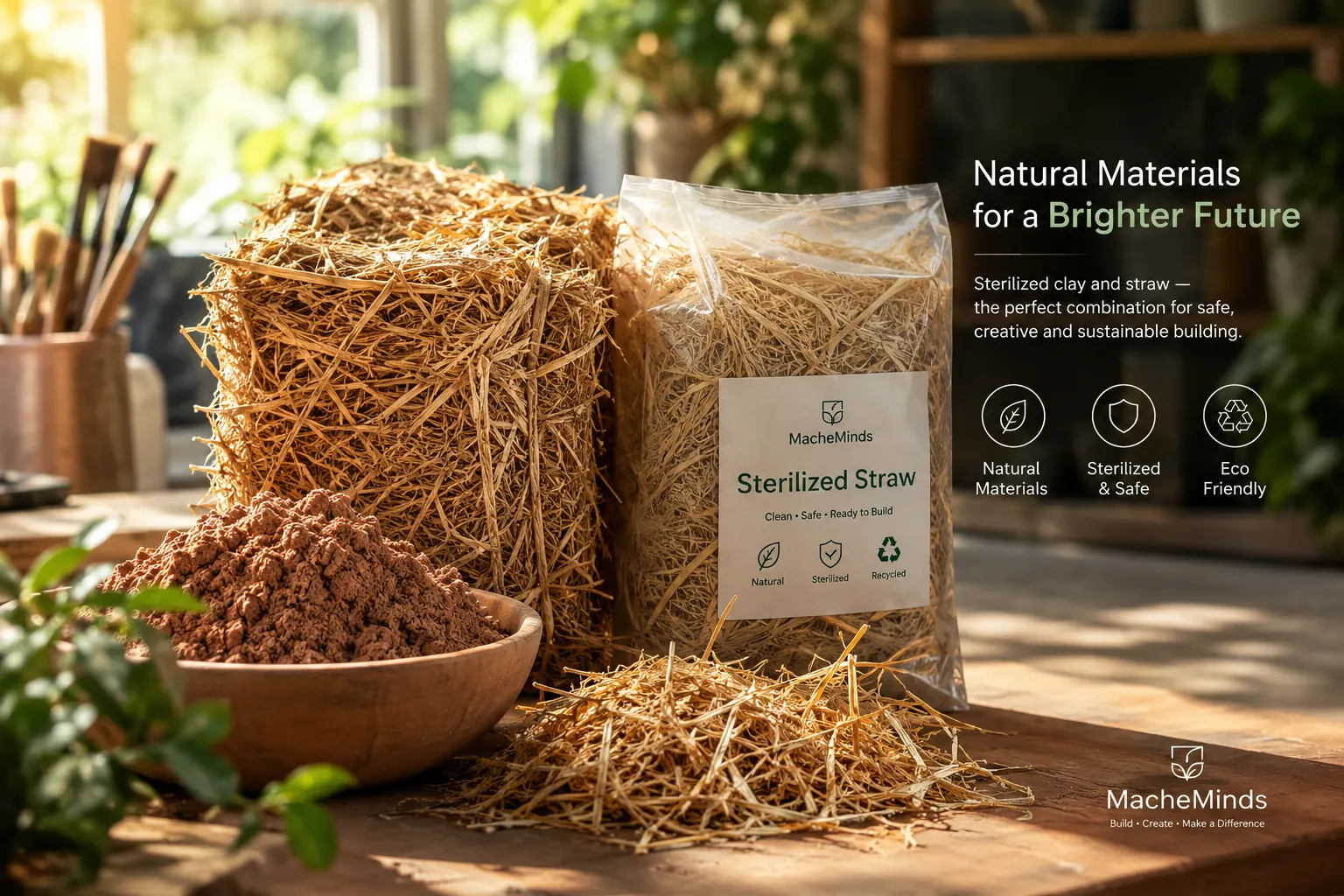
Prepared clay and straw, for the look of the piece.
We can supply prepared clay and cleaned straw when a project needs that earth-and-fibre look. The practice behind it is kâhgel, an established way of working with earth and straw, used here as modelling, texture, and finish on a supervised classroom piece. Wet clay adds weight, can crack as it dries, and straw can make dust. The studio still has to check age, drying time, dust, and supervision before that pack belongs in the plan. Cleaned is not a medical sterilisation certificate, and it is not a child-safety approval.
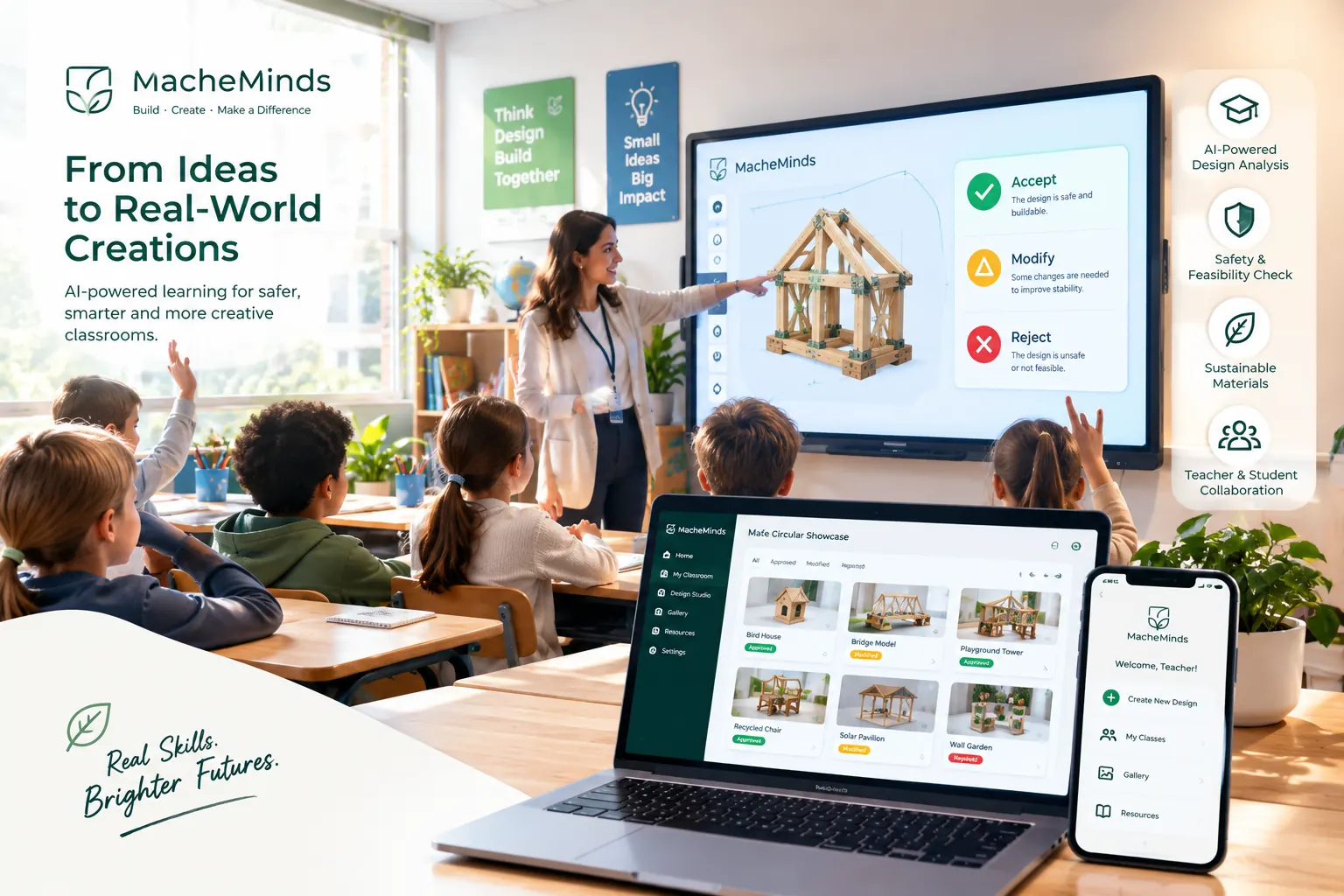
The classroom stays with the adult.
The screen in this picture is the same idea as the studio: a build can be accepted, sent back for a change, or stopped. The picture is a concept of that moment. It is not a record of a real class, and it is not proof that a structure is safe.
What the application does.
The account belongs to the adult. There is no child login, no child name, and no face. Inside the account the material bank is sorted by age and by sensitivities such as asthma, latex, egg, or mouthing. Samples are schematics. The lab gives an indicative load, with the limit written on the screen. The decision model comes from real trials, image analysis, and reports from the people who built the pieces. It is there to cut mistakes and risk.
- 1
Sign in as the adult who will be in the room.
- 2
Set the youngest age and any known sensitivity.
- 3
Add only the materials that pass that screen, and measure them.
- 4
Open a sample if you want a picture of the parts.
- 5
Run the check. Read ACCEPT, REVISE, REJECT, or INSUFFICIENT DATA.
- 6
Print the pack, sign it, and later record what actually happened.